
Saving the Himalayan Ray-Finned Fish
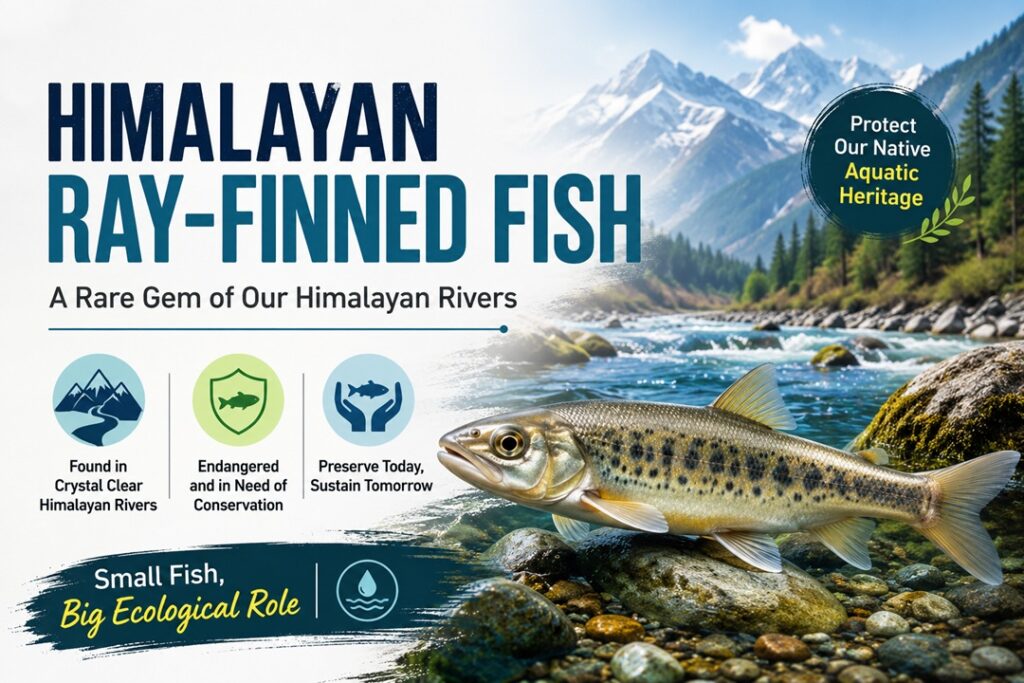
Context
The indigenous Sangno clan of Arunachal Pradesh has initiated a community-led translocation programme in East Kameng district to protect the endangered Himalayan ray-finned fish (Schizothorax pelzami). The initiative involves relocating the fish to suitable habitats and promoting community-based conservation to strengthen the species’ long-term survival.
About the Himalayan Ray-Finned Fish
What is it?
- The Himalayan ray-finned fish (Schizothorax pelzami), locally known as Ngarsing in the Nyishi language, is an indigenous cold-water freshwater fish belonging to the Cyprinidae (carp and minnow) family.
- It is a member of the Teleostei, the largest group of modern bony fishes, and is specially adapted to survive in swift, high-altitude Himalayan rivers.
Range and Habitat
- Natural Distribution: Found in the cold, fast-flowing rivers and mountain streams of the eastern Himalayas and adjoining Transcaspian regions.
- Preferred Habitat: Occupies pristine, oxygen-rich glacial streams and upland river channels such as the Lapabung and Richaso streams in Arunachal Pradesh.
- Ecological Niche: Spawns in shallow upper reaches of rivers, avoiding larger predatory fish such as the Mahseer that dominate downstream waters.
Protection Status
- IUCN Red List: Endangered
Distinctive Characteristics
- Ray-Supported Fins: Flexible bony fin rays provide excellent balance and maneuverability in turbulent mountain currents.
- Symmetrical Tail Fin: A true homocercal tail enables efficient propulsion and stable swimming against strong water flow.
- Extendable Mouth: The protrusible jaw allows the fish to graze algae and tiny aquatic organisms attached to rocks and streambeds.
- Lightweight Scale Covering: Smooth, overlapping scales minimize drag, improving swimming efficiency in rapid streams.
Why is it Important?
- The species is highly sensitive to changes in water quality, temperature, and dissolved oxygen, making it an important bioindicator of Himalayan freshwater ecosystem health.
- Community-led measures such as fish translocation, seasonal fishing bans, and habitat protection help conserve the species while supporting local livelihoods and promoting sustainable eco-tourism.
Source : The Hindu