
Strengthening Childcare Safety in India: Crèche Regulations and Protection Standards
Context
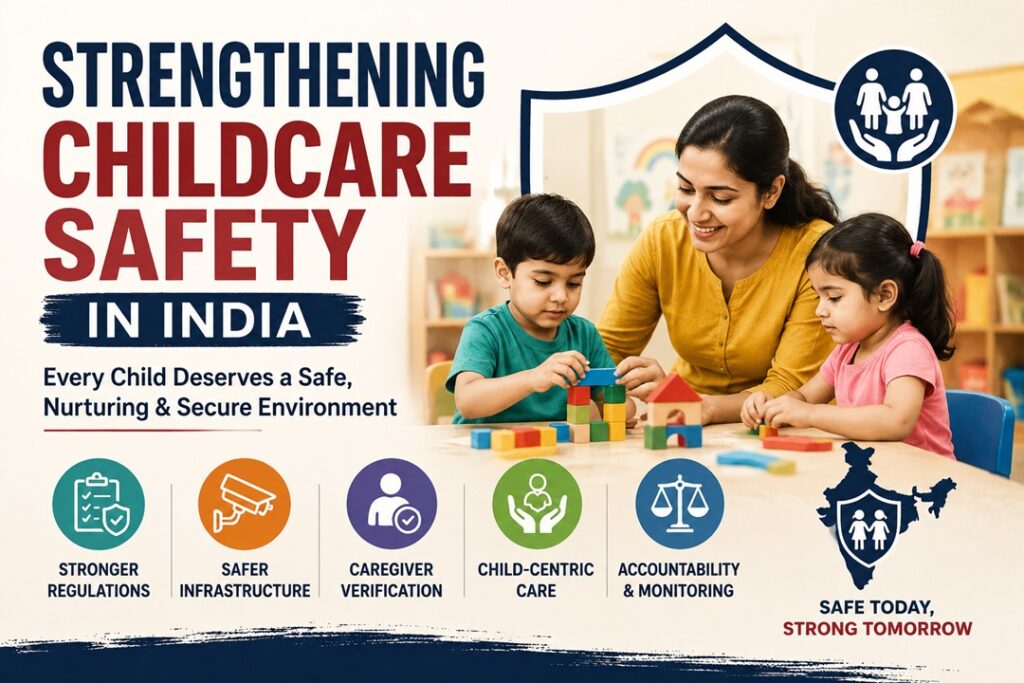
The alleged abuse of toddlers by caregivers at the Little Buds Day Care Centre located on the Capgemini campus in Brookefield, Bengaluru, has sparked nationwide concern over the safety and regulation of childcare centres. Following the emergence of CCTV footage showing children being physically assaulted, the incident prompted police action and renewed calls for stricter implementation of childcare regulations. It has highlighted the urgent need for stronger caregiver verification, continuous CCTV monitoring, regular inspections, and effective enforcement of labour laws governing workplace crèches.
Crèche Guidelines and Childcare Standards in India
About Crèches
A crèche is a childcare facility that provides a safe, secure, and nurturing environment for infants and young children while their parents or guardians are at work. Besides ensuring supervision, crèches focus on nutrition, hygiene, healthcare, rest, emotional well-being, and age-appropriate learning to support early childhood development.
Key Features
Age Eligibility
- Crèches generally admit children aged 6 months to 6 years.
- They provide day-care support for children during working hours.
Expansion under the Palna Scheme
- Under Mission Shakti, the Government of India plans to establish around 17,000 Anganwadi-cum-Crèches (AWCCs) across the country.
- The scheme aims to improve access to affordable and quality childcare, particularly for working women.
Women Caregivers
- National guidelines recommend appointing female caregivers and helpers to ensure a child-friendly and secure environment.
- Trained staff are encouraged to improve childcare quality.
Mandatory Workplace Crèches
- Establishments employing 50 or more workers are legally required to provide or arrange crèche facilities under labour laws.
Legal and Regulatory Framework
National Minimum Standards and Protocol for Crèches (2024)
Issued jointly by the Ministry of Women & Child Development (MWCD) and the Ministry of Labour & Employment (MoLE), the 2024 protocol lays down minimum standards for childcare centres across India.
Infrastructure Standards
- Preferably located on the ground floor.
- Child-friendly buildings with adequate ventilation and natural lighting.
- Safe doors and windows with protective fittings.
- Hygienic toilets suitable for children.
- Continuous supply of clean drinking water.
- Safe kitchens and food preparation areas.
- Designated indoor and outdoor play spaces.
Caregiver Eligibility
Caregivers should possess:
- Police verification certificate.
- Character certificate.
- Medical fitness certificate.
- Preference for training in childcare, nursing, or early childhood education.
- Regular orientation and refresher training.
Child Safety Measures
- CCTV cameras covering important areas.
- Secure entry and exit systems.
- Proper child handover procedures.
- First-aid facilities and emergency response plans.
- Fire safety equipment and evacuation procedures.
Parent Participation
Every crèche should establish a Crèche Administrative Committee (CAC) consisting of management representatives and parents to:
- Monitor service quality.
- Address grievances.
- Review safety measures.
- Improve accountability.
Labour Law Provisions
Code on Social Security, 2020
- Employers with 50 or more employees must establish or arrange a crèche facility within the prescribed distance.
Occupational Safety, Health and Working Conditions (OSHWC) Code, 2020
- Reinforces employer responsibility to provide welfare facilities, including childcare services wherever applicable.
Benefits for Working Mothers
Working mothers are entitled to:
- Four visits per day to the crèche.
- Breastfeeding and childcare breaks.
- Travel time between the workplace and crèche counted as paid working time.
Major Challenges
Inconsistent State-Level Implementation
Since the 2024 protocol serves primarily as guidance, implementation varies significantly among states.
Weak Compliance
Many eligible employers fail to establish crèche facilities due to inadequate monitoring and weak enforcement.
Insufficient Caregiver Screening
Some childcare providers recruit staff through third-party agencies without proper police verification, psychological assessment, or professional training.
Lack of Frequent Inspections
Many centres undergo only document-based compliance checks rather than regular surprise inspections.
Poor Emergency Preparedness
Several daycare facilities lack formal linkages with nearby hospitals and emergency medical services.
Limited Parent Oversight
Grievance redressal systems and parent involvement remain inadequate in many private childcare centres.
Way Forward
Strengthen CCTV Monitoring
- Make tamper-proof CCTV systems mandatory.
- Provide secure real-time viewing access to parents.
- Preserve recordings for regulatory review.
Legally Enforce National Standards
States should incorporate the 2024 National Minimum Standards into enforceable legislation with clear penalties for violations.
Enhance Inspections
Conduct regular joint surprise inspections involving:
- Labour Department
- Police
- Child Protection Units
- Women & Child Development Department
- Local authorities
National Caregiver Registry
Create a centralized database containing:
- Verified childcare professionals.
- Training certifications.
- Employment history.
- Records of disciplinary action to prevent repeat offenders.
Mandatory Professional Training
Require certification in:
- Child protection.
- First aid.
- Nutrition.
- Early childhood care and education.
- Emergency response.
Support Shared Workplace Crèches
Promote common childcare facilities for MSMEs, industrial clusters, and office parks through government incentives and public-private partnerships.
Strengthen Complaint Mechanisms
- Child helplines.
- Anonymous complaint portals.
- Periodic parent feedback.
- Independent audits.
Conclusion
The Bengaluru daycare abuse incident has exposed significant gaps in childcare safety and regulatory enforcement despite the existence of comprehensive national guidelines. While the National Minimum Standards and Protocol for Crèches (2024) and labour welfare laws provide a robust framework, their effectiveness depends on strict implementation, continuous monitoring, professional caregiver training, and stronger accountability. Ensuring safe, transparent, and child-friendly crèche services is essential for protecting children’s rights and supporting the growing participation of women in the workforce.
Source : The Hindu