
Cybersecurity Concerns After Kudankulam-Linked Data Exposure
Context
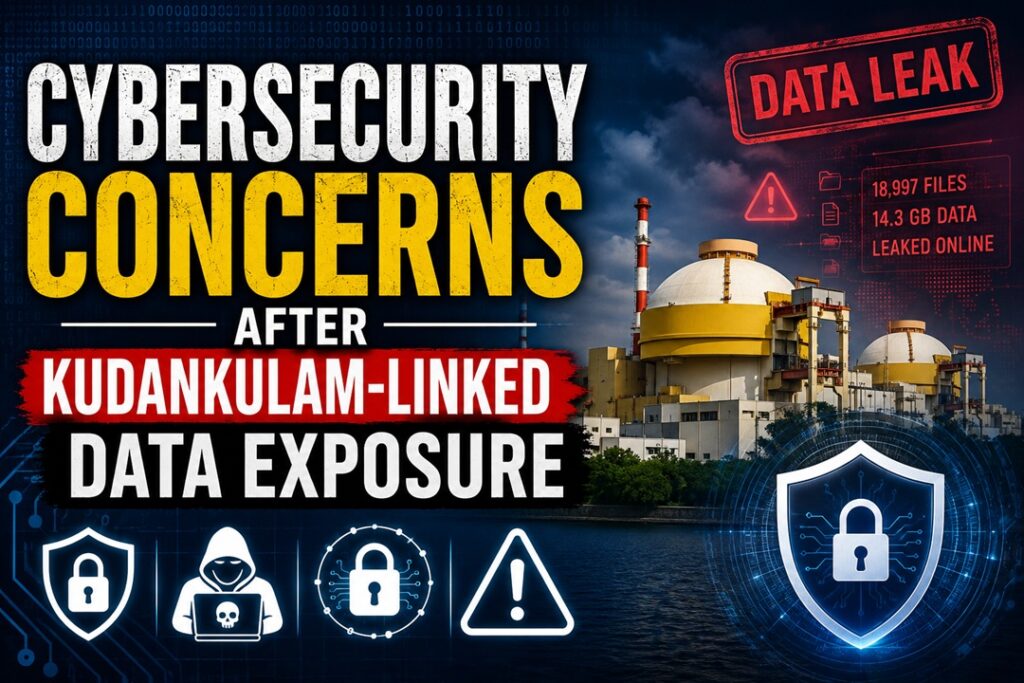
Reports indicated that a ransomware group released nearly 14.3 GB of data containing around 18,997 files allegedly associated with Units 3 and 4 of the Kudankulam Nuclear Power Plant (KKNPP) on the dark web. Authorities clarified that reactor control systems and classified operational software were not compromised, but the incident has raised concerns over cybersecurity within critical infrastructure supply chains.
Cybersecurity Incident Linked to Kudankulam Nuclear Project
What is the Incident?
The reported breach involves the unauthorized extraction and publication of non-sensitive engineering, administrative, and project-related documents connected to the expansion units of India’s largest nuclear power facility. Although core reactor operations remain protected, the exposure of supporting documents underscores risks arising from third-party digital ecosystems.
How Did the Data Exposure Occur?
Third-Party Contractor Became the Entry Point
Instead of directly attacking the highly secured infrastructure of the Nuclear Power Corporation of India Limited (NPCIL), cybercriminals reportedly gained access through a private engineering contractor associated with the project.
Private Cloud Infrastructure Was Targeted
The compromised documents were stored within a commercial cloud environment managed by an external Indian data centre provider, making the contractor’s digital infrastructure the primary target.
Early Detection Could Not Prevent Data Theft
Security monitoring tools reportedly detected suspicious activity and isolated affected servers. However, attackers had allegedly copied portions of the data before containment measures were completed.
Leak Followed Failed Extortion Attempt
After ransom demands reportedly went unanswered, the attackers released the stolen files on dark-web platforms along with data obtained from multiple organizations.
India’s Existing Framework for Protecting Critical Infrastructure
National Cyber Emergency Response
CERT-In serves as India’s central agency for cybersecurity incident response, threat intelligence, vulnerability management, and coordination during cyber emergencies.
Isolation of Strategic Operational Networks
Critical sectors such as nuclear facilities, defence establishments, and space infrastructure operate important industrial control systems on isolated (air-gapped) networks separated from public internet connectivity.
Cyber Threat Intelligence Mechanisms
The National Cyber Coordination Centre (NCCC) continuously monitors cyber threats, analyses malicious activities, and supports coordinated responses against attacks targeting national infrastructure.
Legal Framework for Data Protection
Cybersecurity responsibilities are governed through the Information Technology Act, 2000 and the Digital Personal Data Protection (DPDP) Act, requiring organizations to adopt appropriate safeguards against data breaches.
Major Concerns Arising from Such Incidents
Weakness in Supply Chain Security
Government infrastructure may be well protected, but vendors, contractors, and consulting firms often possess comparatively weaker cybersecurity controls, creating indirect attack pathways.
Exposure of Sensitive Infrastructure Information
Even if operational systems remain secure, engineering drawings, layouts, procurement documents, and project specifications can assist adversaries in planning future cyber or physical attacks.
Increasing Sophistation of Cyber Threat Actors
Critical infrastructure continues to face threats from organized ransomware groups and state-sponsored cyber espionage campaigns targeting valuable industrial and strategic information.
Rise of Data-Theft Based Ransomware
Modern ransomware attacks increasingly focus on stealing sensitive information before encryption, enabling attackers to pressure victims through public data disclosure.
Way Forward
Strengthen Cybersecurity Across the Entire Supply Chain
All contractors, consultants, and vendors associated with strategic infrastructure should comply with cybersecurity standards equivalent to those followed by government agencies.
Improve Protection of Shared Technical Documents
Engineering files should incorporate encryption, access controls, digital watermarking, and controlled document-sharing mechanisms to minimize misuse if compromised.
Expand Continuous Cyber Monitoring
Government agencies and private infrastructure operators should deploy advanced threat-hunting technologies capable of identifying persistent threats before data exfiltration occurs.
Enhance Mandatory Breach Reporting
Timely disclosure of cyber incidents should be strictly enforced to enable faster coordination between government agencies and affected organizations.
Conclusion
The reported Kudankulam-linked data exposure demonstrates that critical infrastructure security extends beyond protecting operational systems. While air-gapped reactor networks remain secure, vulnerabilities within contractors and third-party service providers highlight the need for comprehensive supply-chain cybersecurity, stronger regulatory oversight, and continuous cyber resilience across India’s strategic infrastructure ecosystem.
Source : The Indian Express