
Medical Poverty Trap in India: Healthcare Costs and Financial Vulnerability
Context
The National Sample Survey (NSS) 80th Round (2025) highlights an increase in reported morbidity, substantial dependence on private healthcare and persistent out-of-pocket expenditure (OOPE). These trends raise concerns about whether Indian households can access timely and affordable treatment without falling into financial distress.
What is the Medical Poverty Trap?
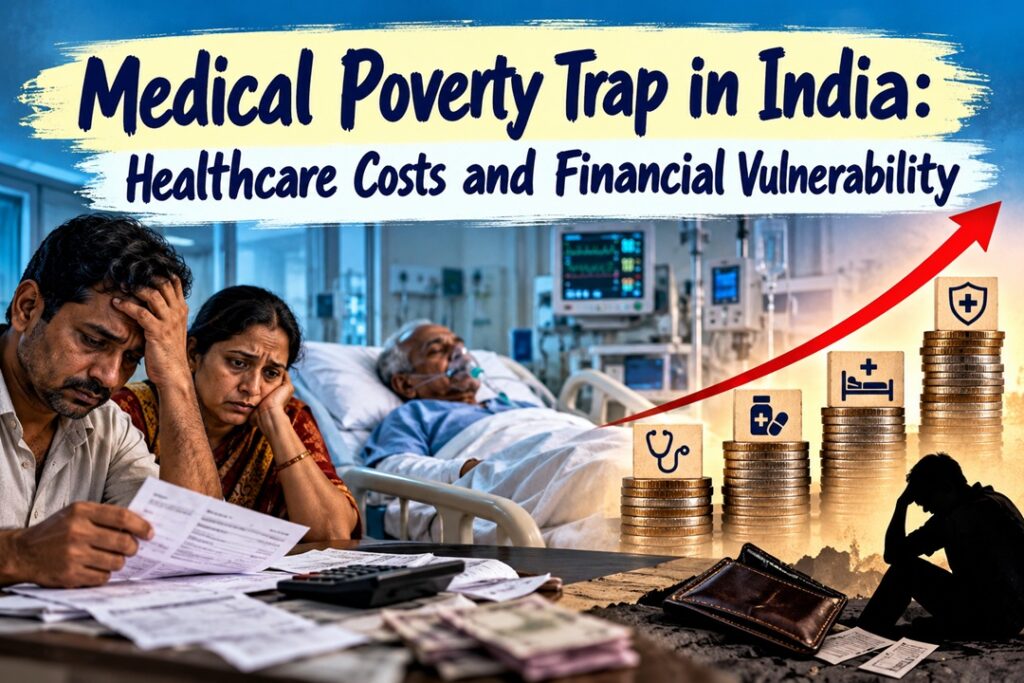
The medical poverty trap refers to a situation in which illness and healthcare expenses push households into poverty, while existing poverty makes it difficult to obtain timely and quality medical care.
- Financial distress: Families may borrow money, sell productive assets or use savings to pay for treatment.
- Delayed treatment: High costs may lead people to postpone consultations, diagnostic tests or essential medicines.
- Intergenerational impact: Medical debt can reduce spending on children’s education, nutrition and other essential needs, perpetuating poverty.
Key Findings of the NSS 80th Round
1. Increase in Reported Morbidity
Reported morbidity increased between 2017–18 and 2025:
- Rural India: From 6.8% to 12.2%.
- Urban India: From 9.1% to 14.9%.
The rise may reflect factors such as population ageing, improved health awareness and greater reporting of illnesses. However, reported morbidity does not necessarily represent an equivalent increase in the actual prevalence of disease.
2. Growing Reliance on Private Healthcare
Private healthcare providers accounted for the treatment of non-hospitalised ailments among:
- 65.4% of rural patients.
- 74.8% of urban patients.
Public healthcare utilisation was relatively higher in states such as Odisha, Tamil Nadu and Chhattisgarh, while Punjab showed lower utilisation. These differences point to variations in public facility access, service availability and people’s perceptions of healthcare quality.
3. Significant Out-of-Pocket Expenditure
Healthcare costs differ considerably between public and private facilities.
| Type of treatment | Government facilities | Private facilities |
|---|---|---|
| Non-hospitalised ailments — rural | ₹304 | ₹1,541 |
| Non-hospitalised ailments — urban | ₹257 | ₹1,343 |
| Hospitalisation — rural | ₹6,905 | ₹47,710 |
| Hospitalisation — urban | ₹6,032 | ₹54,999 |
Figures represent average out-of-pocket expenditure as reported in the supplied NSS data.
The substantially higher expenditure associated with private treatment can place a disproportionate burden on low-income households, particularly when treatment involves repeated consultations, expensive medicines or prolonged hospitalisation.
4. Persistent Regional Disparities
Healthcare affordability varies across states because of differences in public health infrastructure, workforce availability and dependence on private providers.
Economically weaker states, including Bihar and Uttar Pradesh, face particular challenges in ensuring accessible and affordable treatment. Such disparities can reinforce existing inequalities in health outcomes and household economic security.
Why Does India Face a Medical Poverty Trap?
1. High Cost of Private Treatment
Private providers often involve higher consultation, diagnostic, medicine and hospitalisation expenses. For households without adequate savings, even a single medical emergency can create substantial financial stress.
2. Gaps in Public Healthcare Delivery
Shortages of doctors, nurses, medicines, diagnostic facilities and functional health centres can reduce the ability of public institutions to provide timely care. This may compel patients to seek costly private alternatives.
3. Unequal Distribution of Healthcare Resources
The concentration of specialised facilities and medical professionals in certain urban centres creates access barriers for rural and underserved populations. Travel, accommodation and lost wages further increase the effective cost of treatment.
4. Inadequate Financial Protection
Insurance may not cover every treatment, medicine or diagnostic service. Exclusions, reimbursement delays, limited hospital networks and difficulties accessing cashless care can leave families paying substantial amounts themselves.
5. Informal Employment and Income Insecurity
Workers without paid sick leave or stable earnings may lose income while seeking treatment. The combined burden of medical bills and lost wages makes illness particularly damaging for informal workers and daily-wage earners.
Why Is Health Insurance Alone Insufficient?
Government initiatives such as Ayushman Bharat have expanded efforts to protect households against healthcare expenses. The NSS figures provided indicate a substantial increase in reported health insurance coverage between 2017–18 and 2025.
- Rural India: Coverage increased from 14.1% to 47.4%.
- Urban India: Coverage increased from 19.1% to 44.3%.
Nevertheless, the persistence of high out-of-pocket expenditure highlights the difference between having insurance coverage and receiving effective financial protection.
Insurance alone cannot address shortages of healthcare professionals, inaccessible facilities or poor service quality. Its effectiveness also depends on awareness of entitlements, access to empanelled hospitals, availability of covered treatments and the ability to obtain services without making substantial upfront payments.
Therefore, financial protection must be accompanied by improvements in the availability, affordability and quality of healthcare.
Way Forward
1. Strengthen Public Healthcare Infrastructure
Upgrade Ayushman Arogya Mandirs, primary health centres, community health centres and district hospitals. Ensure adequate staffing, essential medicines, diagnostic services and functional equipment.
2. Improve Primary and Preventive Care
Strengthen screening, vaccination, health education and early diagnosis. Timely intervention can reduce avoidable complications, expensive hospitalisations and long-term treatment costs.
3. Make Health Insurance More Effective
Simplify enrolment and claims procedures, improve awareness of entitlements and ensure that eligible patients can access genuinely cashless treatment. Monitor denied claims, additional payments and gaps in coverage.
4. Reduce Regional Inequalities
Prioritise underserved districts and economically weaker states through need-based funding, improved health workforce distribution, mobile medical services and better referral networks.
5. Regulate Healthcare Costs and Improve Transparency
Promote transparent billing, monitor unreasonable charges and strengthen oversight of private healthcare providers. Improve access to affordable generic medicines and essential diagnostic tests.
6. Protect Vulnerable Households
Integrate healthcare financing with social protection measures for informal workers, low-income families and people with chronic illnesses. Support mechanisms should account for both treatment expenses and income lost during illness.
7. Align Insurance with Service Delivery
Coordinate public health investment, insurance programmes and primary healthcare services. Expanding financial coverage must go hand in hand with ensuring that patients can actually access quality treatment when needed.
Conclusion
The NSS 80th Round underscores the continuing challenge of making healthcare affordable and accessible across India. Rising reported morbidity, dependence on private providers and substantial out-of-pocket expenses expose households to the risk of financial hardship.
India must move beyond measuring progress through insurance coverage alone and focus on effective financial protection, stronger public health facilities and equitable access to quality treatment. Universal health coverage can become meaningful only when seeking medical care does not threaten a household’s economic security.
Source : Business Standard