ULLAS Scheme and Lakshadweep’s Journey Towards Universal Literacy
Context
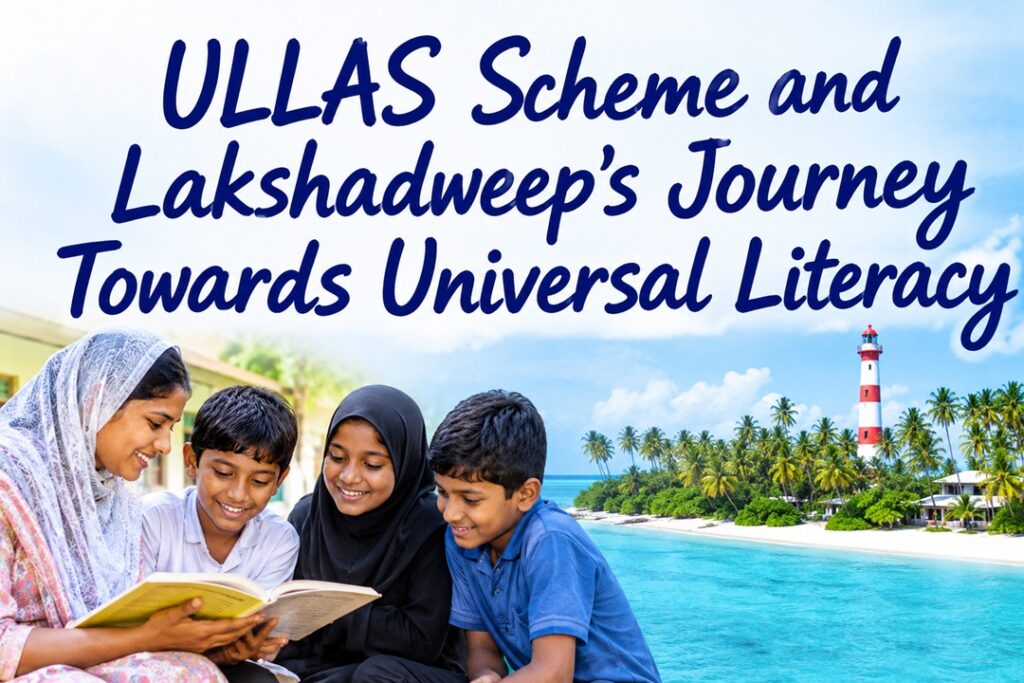
Lakshadweep has been officially declared a 100% literate Union Territory by Administrator Praful Patel under the ULLAS–Nav Bharat Saaksharta Karyakram. This achievement highlights the role of adult education, community participation and inclusive learning in advancing India’s goal of universal literacy.
What is the ULLAS Scheme?
The Understanding Lifelong Learning for All in Society (ULLAS), also known as the Nav Bharat Saaksharta Karyakram (New India Literacy Programme), is a Centrally Sponsored Scheme launched to provide educational opportunities to non-literate individuals aged 15 years and above who could not access formal schooling.
- Policy alignment: It is aligned with the National Education Policy (NEP) 2020.
- Implementation period: Financial Years 2022–2027.
- Nodal authority: Department of School Education and Literacy (DoSEL), Ministry of Education.
- Vision: Jan Jan Saakshar (Making Every Person Literate).
- Target: To educate five crore learners during the five-year period, with an annual target of one crore learners.
Major Objectives of the Scheme
- Universal adult literacy: Extend educational opportunities to adults who have missed formal education.
- Functional competency: Develop reading, writing, numeracy and practical problem-solving abilities.
- Life skills development: Improve financial, digital, legal and healthcare awareness.
- Educational continuity: Enable learners to pursue basic education equivalent to formal schooling and continue learning throughout life.
- Economic empowerment: Strengthen vocational competencies and improve access to livelihood opportunities.
Key Features of ULLAS
1. Comprehensive Understanding of Literacy
The scheme moves beyond basic reading and writing to include numeracy, digital competence, financial awareness and the ability to apply knowledge in everyday situations.
2. Community Participation and Volunteerism
ULLAS encourages citizen-led participation under the principle of Kartavya Bodh. Students, teachers and civil society members can volunteer to support adult learners, making literacy a collective social responsibility.
3. Schools as Community Learning Centres
Government and aided schools serve as important implementation centres. Community spaces such as panchayat offices, public libraries and community halls can function as Samajik Chetna Kendras, facilitating learning beyond regular school hours.
4. Digital Learning Infrastructure
The ULLAS mobile application and portal support learner and volunteer registration, digital learning resources and progress monitoring. Integration with the DIKSHA platform strengthens access to technology-enabled educational content.
5. Learning in Regional Languages
Educational materials and foundational primers are available in 27 regional languages and mother tongues, helping learners understand concepts in familiar linguistic settings.
6. Assessment and Certification
The Foundational Literacy and Numeracy Assessment Test (FLNAT) evaluates learners’ competencies. Successful candidates receive nationally recognised certificates authenticated by the Department of School Education and Literacy and the National Institute of Open Schooling (NIOS).
7. Focus on Disadvantaged Groups
The scheme prioritises women, SCs, STs, OBCs, minority communities, persons with disabilities, migrant workers and nomadic populations, particularly in Aspirational Districts and Educationally Backward Blocks.
Significance of Lakshadweep’s Achievement
- Inclusive development: Demonstrates the potential of targeted adult education in expanding access to learning.
- Social empowerment: Literacy can strengthen individuals’ ability to understand their rights, access public services and participate in community affairs.
- Economic participation: Basic digital and financial literacy can facilitate access to banking, welfare schemes and livelihood opportunities.
- Women’s empowerment: Adult learning can enhance autonomy, confidence and participation in household and community decisions.
- Governance and citizenship: Literate citizens are better equipped to engage with public institutions and make informed decisions.
- Replicable model: Lakshadweep’s experience can offer lessons for other States and Union Territories, subject to their differing social and geographical conditions.
Challenges in Achieving Sustained Literacy
- Maintaining literacy levels: Initial literacy gains may weaken without regular opportunities to read, write and practise numeracy.
- Digital divide: Limited connectivity, device access and digital familiarity can constrain technology-based learning.
- Geographical barriers: Remote settlements and scattered island communities may face difficulties in accessing learning facilities.
- Learner retention: Employment responsibilities, household work and irregular schedules can affect adult participation.
- Measuring functional literacy: Administrative declarations and assessment results must be complemented by evidence of learners’ ability to apply skills in daily life.
Way Forward
- Strengthen post-literacy programmes: Establish reading clubs, community libraries and continuing education centres to prevent a decline in acquired skills.
- Promote local-language learning: Develop culturally relevant materials suited to the needs of adult learners.
- Expand digital access: Provide assisted digital learning facilities and offline resources in areas with connectivity constraints.
- Improve outcome monitoring: Track learning retention, practical numeracy, digital usage and financial awareness beyond initial certification.
- Encourage local partnerships: Involve panchayats, self-help groups, educational institutions and civil society organisations in sustaining literacy.
- Replicate successful practices: Adapt effective community-based approaches to the needs of underserved regions across India.
Conclusion
Lakshadweep’s literacy milestone under ULLAS highlights the importance of adult education in building an inclusive and knowledge-driven society. However, the long-term success of literacy initiatives depends not only on achieving literacy targets but also on ensuring that people retain and apply their skills throughout life. Strengthening continuing education and community participation will be essential to realising the vision of Jan Jan Saakshar.
Source : News On Air